
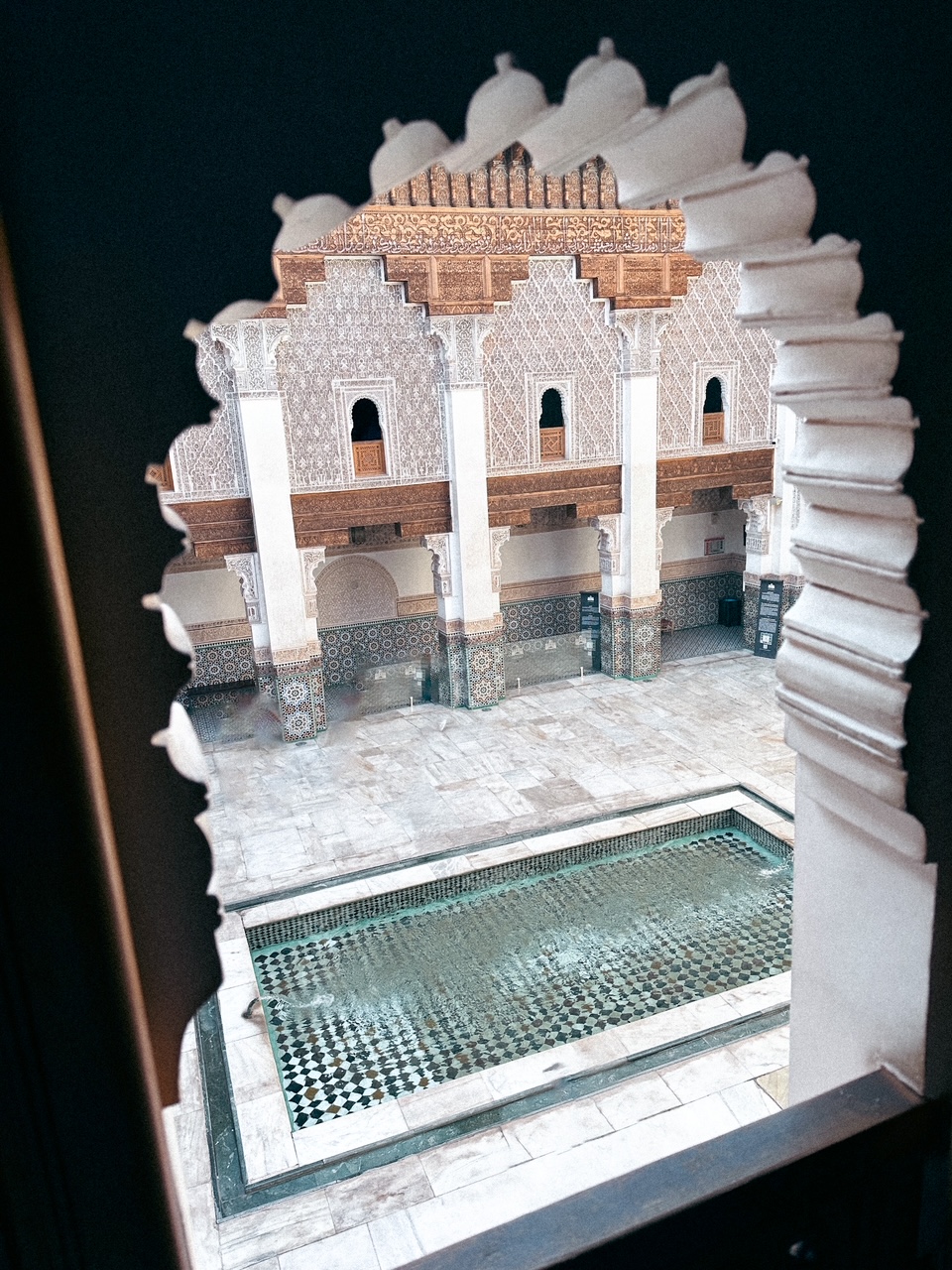
Is Home a Place, or a Feeling? A Diasporic Return to Morocco in Winter
Ever since I was six months old, Morocco had been a yearly, non-negotiable summer trip. For three generations, the Moroccan diaspora in Europe has returned each summer in a silat rahim ritual – a renewal of ties to family and homeland. But this time was different. I wasn’t travelling with relatives, nor in the familiar heat of July. I was going to Morocco in winter – alone, on a last-minute trip, untethered from the rhythms that had defined every visit of my life so far.
*Dislaimer: This article contains affiliate links which may make me enough to buy a coffee when writing articles. Thank you so much for your readership <3
It was mid-December and as the rest of the UK made their final Christmas preparations, I hopped onto a flight to Ouarzazate and arrived at the crack of dawn. My first time staying in a riad felt strangely unfamiliar. Growing up, I never considered a riad anything special. In fact, I wasn’t even aware of it being called a riad. It was simply my late grandparents’ house, a place where extended family lived under one roof. The rooms were never quiet: children darted across the open courtyard from room to room, plates of homemade biscuits and squares of buttery m’smen passed between generations, my aunts’ laughter spilling into every corner, leaving red faces and sometimes even tears. There were constant invitations, almost pleading, to eat more, to have another cup of atay (Moroccan mint tea) – a generosity that felt at once overwhelming and comforting.

Now, in Ouarzazate in winter, the riad was peaceful. The air held a gentle chill. When the host brought out a tray of mint tea and poured it from a height until bubbles crowned the glass, a wave of reflection washed over me. This was a drink I had shared thousands of times in summers past. It was quick to prepare but unhurried once served – an anchor for stories about eccentric late relatives, dramatic retellings of family events, and the rhythms of life back home. A ritual that once felt ordinary revealed itself as quietly sacred.
Outside, Souss Amazigh drifted through the air everywhere I went – thick and familiar in tone, yet foreign in dialect. Men and women wrapped themselves in winter jelabas, their pointed hoods raised toward a morning sky so clear it felt almost sharp. The city moved slowly, as though conserving warmth.
From a distance, Ait Ben Haddou rose from the landscape like a memory. Its soft, dim winter light made its reddish walls glow. I almost saw, superimposed on it, my father’s old village – the one he insisted we visit each year for silat rahim. As children, my siblings and I complained he was dragging us to what we called “ruins”. But standing before this UNESCO World Heritage site, my impulse to photograph every angle struck me, and I realised I had been wrong all along. What once felt mundane was layered with memory and culture I was only now learning to understand.

The next morning, I boarded a CTM coach to Marrakech. The winding roads felt like a moving memory. Remote villages flashed by, then the dramatic shoulders of the Atlas Mountains, ridged and powerful. I stayed wide awake, afraid to miss anything. I’m part of a diaspora that made this journey not by plane but by car and ferry, year after year, crossing Europe until Morocco finally rose into view.
As a child, the smells, sights, sounds, and feelings of these routes were known to me by heart; I could tell the difference between the countries without entering towns or cities, but simply through my senses – even if all I saw were highways along the way. The damp crispness of England, the pastoral calm of France, the sun-stained colours of Spain, and finally the majestic Riff mountains of Morocco felt like being welcomed back into something ancestral. Eventually arriving in Morocco, it felt as much mine as it did my ancestors’: those who had never left for life overseas, whose lives and labours shaped how we see every Kasbah, every Medina, and every Souk.

I arrived in Marrakech a month after the devastating 6.9-magnitude earthquake that shook Al Haouz. The red city was scarred but steady, quietly rebuilding itself. There was a stillness in the alleyways – not emptiness, but a kind of breath held in the air. Walking through the Old Medina, I noticed details I may have overlooked in summer: market vendors opening their stalls in near silence, a woman sweeping dust into a careful pile, quiet and persisting through grief.
Within a day, Marrakech began to reveal its fuller picture: a shifting tapestry of grandeur, Moroccan elegance, and crumbling textures heavy with history. Ancient doors sat beside polished boutiques; traditional spice stalls were tucked between modern cafés. The smells of chargrilled food curled through the air, mixing with the mineral scent of terracotta walls warmed by the midday sun. Every alley seemed to lead to another alley, a labyrinth where time folded in on itself.
Mornings were the most striking. Instead of the usual bustle of tourists and motorbikes, I stepped into unexpected quiet. The Medina’s narrow pathways felt suspended, as though the city was giving itself permission to rest. The silence, especially in winter light, made the shadows deeper and the colours richer.

In countless spontaneous and light hearted interactions, locals called me maghribia dyalna — “one of ours”. Each time I heard it, something in me softened. I didn’t expect it; I didn’t even realise how much I had longed for it. Growing up in the UK, belonging was complicated. At school and in public spaces, I was the ethnically ambiguous girl, even when I sounded British. In Morocco, especially in my parents’ hometowns, I was the British girl, even though my face, hair, and skin told a different story. That duality shaped my childhood – belonging everywhere and nowhere at once.
But here in Marrakech, in a place where no one knew me, the words maghribia dyalna felt like a reclamation. There was no scrutiny of my accent, no questions about my location of birth, no hesitation. Their acceptance came without conditions. It took travelling alone in winter — away from family, from tradition, from the versions of myself shaped by other people’s memories — to experience the feeling I’d been circling for years: that home could recognise me even when I doubted my right to claim it.

Marrakech grounded me in ways I didn’t expect. Its terracotta walls, its sunlit rooftops, its maze of alleys that seemed to knit the old and the new together – all of it felt like a reminder that heritage is never static. Urban Morocco in winter was quieter, gentler, more contemplative. It allowed me space to feel the country in a different register: less performative than summer, less crowded, more intimate.
Over the years, I’ve developed a habit of booking impulsive trips based purely on feeling. Some taught me about independence, others about perspective. But this journey wasn’t a lesson so much as a reconciliation. Morocco, in its winter quiet, slow mornings, and familiar language spoken in unfamiliar accents, extended a gentle reminder: home isn’t always a place. Often, it’s a feeling. sound. A story. A smell that tugs at memory. A face that mirrors your own.
A language you understand, even when you don’t know the words.
For the diaspora, home lives in motion. It travels through rituals like silat rahim, through return journeys taken year after year, through the shifting landscapes of childhood road trips across continents. It exists in the courage to keep seeking connection, even when belonging is complicated.
On that winter trip, Morocco didn’t just feel like the country my parents came from. It felt like the country that recognised me without explanation, proof or performance. Home, I realised, isn’t a fixed point on a map. It’s a quiet certainty that rises within you, often in the most unexpected places, whispering that you are exactly where you are meant to be.
Thanks for sticking around until the end! If anything in this post resonates with you, feel free to buy me a coffee here. Or check out my photo preset for mobile here to take your photos to the next level.